
SEARCH BY KEYWORD OR BROWSE BELOW »
“Abundance” Without Sacrificing Values: Community-Benefit Agreements and Streamlined Development
We do need more abundant housing, public transportation, and energy infrastructure, but forfeiting labor, environmental, and democratic values to get there can’t be the answer. How do we reconcile both goals?
Amend “Right to Farm” Laws to Protect Community and Local Power
U.S. agriculture is dominated by industrial “factory farms,” also known as Concentrated Animal Feeding Operations (CAFOs) or “integrators.” RTF laws, once functioning as protection for local and legacy farmers, now primarily protect large-scale corporate operations.
Restrict Lobbying and Political Activity by State-Regulated Utility Companies
Private companies providing public services — and granted monopoly franchises in exchange for doing so — have captured the regulatory and legislative processes intended to keep their interests aligned with those of the public. The result is growing energy poverty, continued climate abuse and misinformation, and widespread voter disenfranchisement.
Prohibit Investor-Owned Utilities from Passing Lobbying Costs on to Consumers
Utilities spend hundreds of millions of dollars every year lobbying federal and state lawmakers, agencies, and regulators. This investment influences the pace and progress of climate legislation, cements existing utilities’ market dominance, and of course, ensures ongoing high rates of return for IOUs.
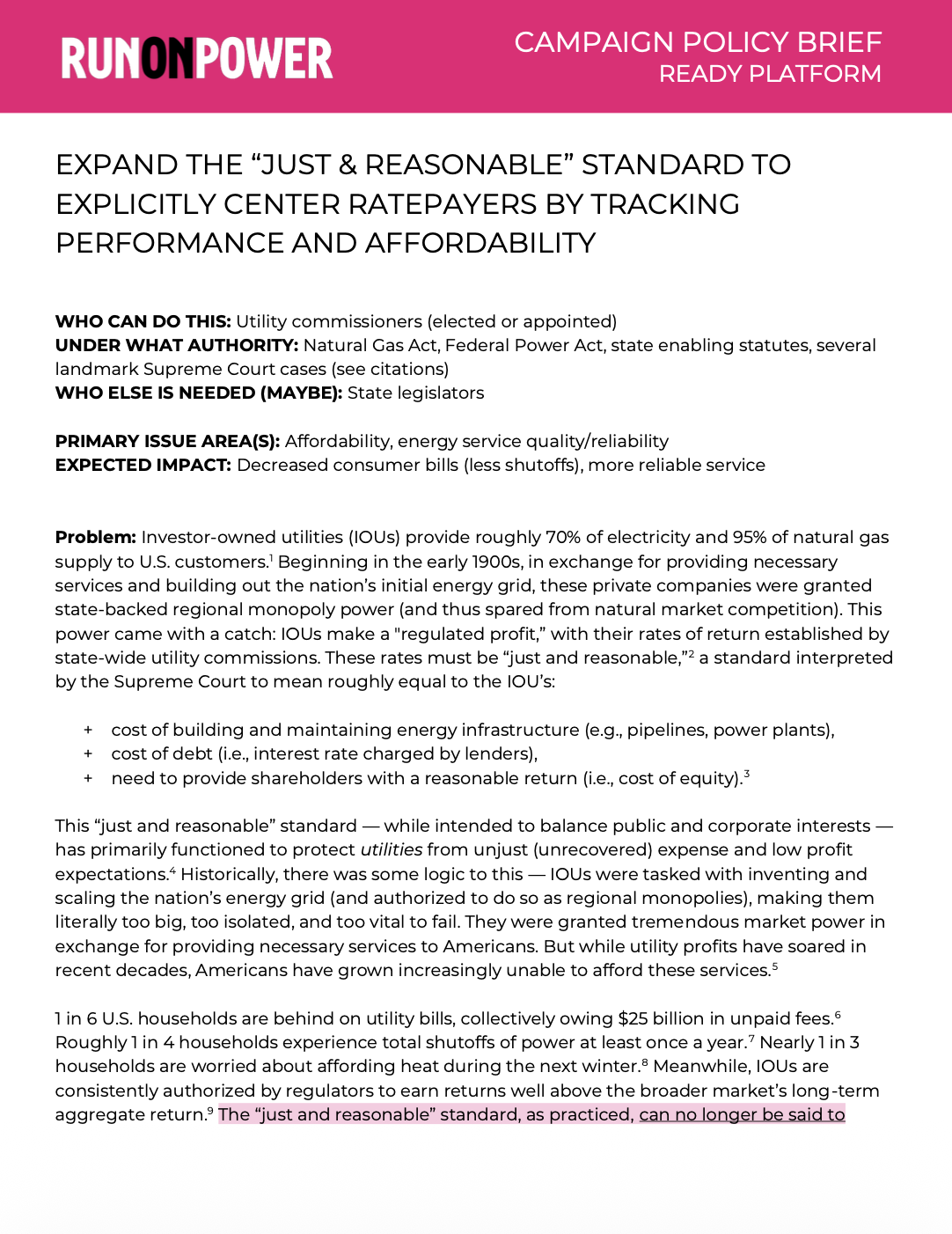
Expand the “Just and Reasonable” Standard to Explicitly Center Ratepayers by Tracking Performance and Affordability
The “just and reasonable” standard, as practiced, can no longer be said to effectively balance public and corporate interests — a balance which is the entire point of the regulated utilities market.
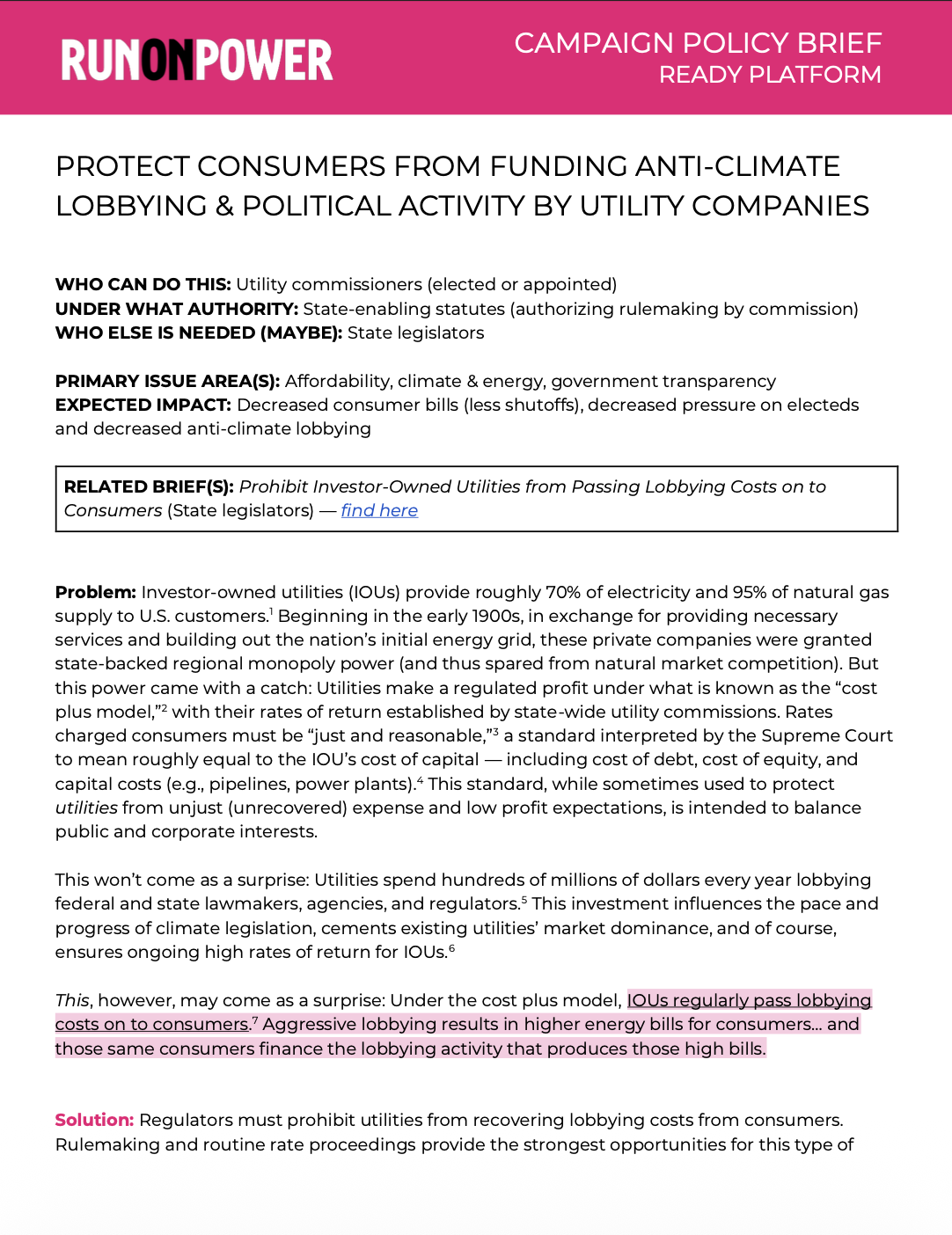
Protect Consumers from Funding Anti-Climate Lobbying and Political Activity by Utility Companies
Utilities spend hundreds of millions of dollars every year lobbying federal and state lawmakers, agencies, and regulators. This investment influences the pace and progress of climate legislation, cements existing utilities’ market dominance, and of course, ensures ongoing high rates of return for IOUs.
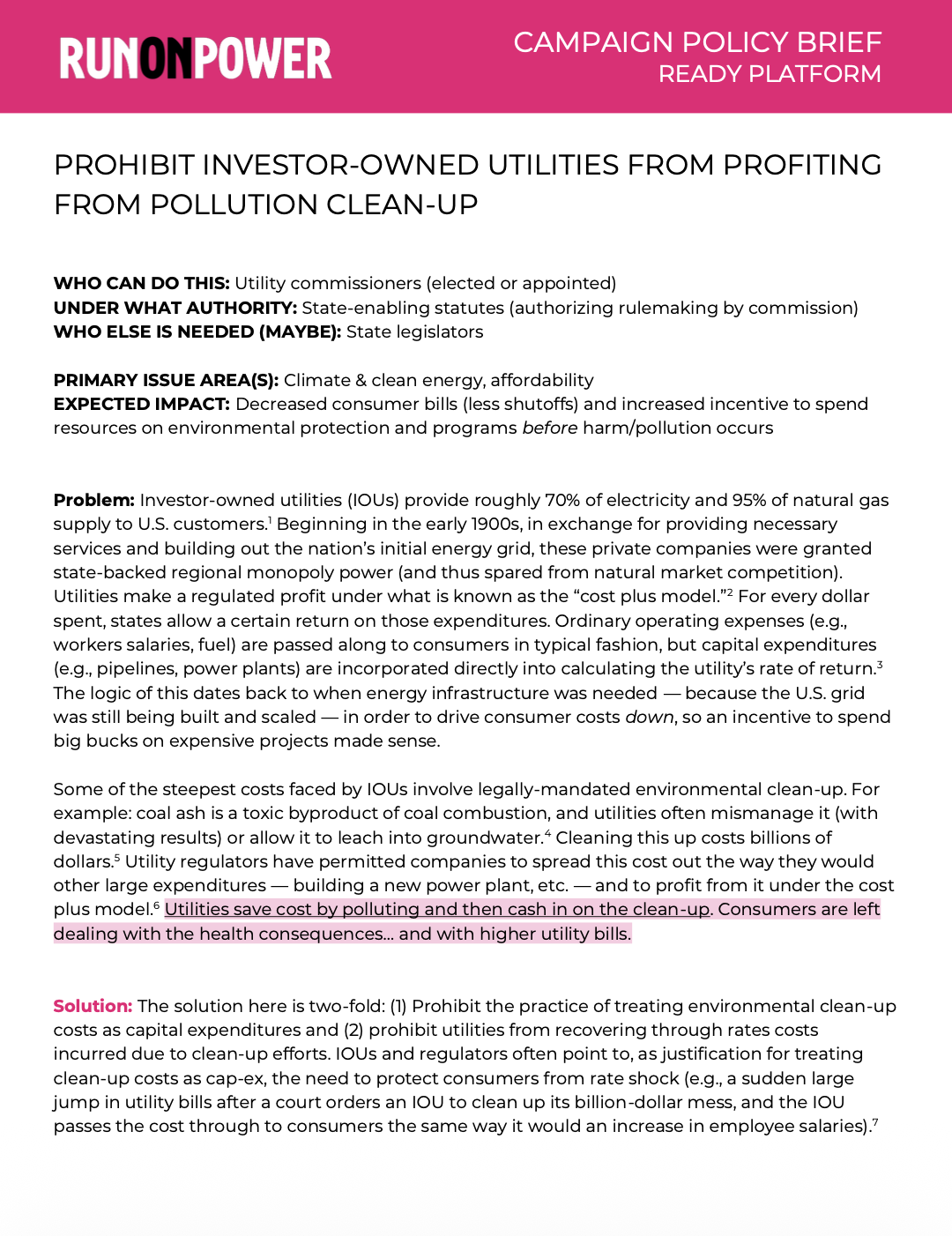
Prohibit Investor-Owned Utilities from Profiting from Pollution Clean-Up
Utilities save cost by polluting and then cash in on the clean-up. Consumers are left dealing with the health consequences… and with higher utility bills.
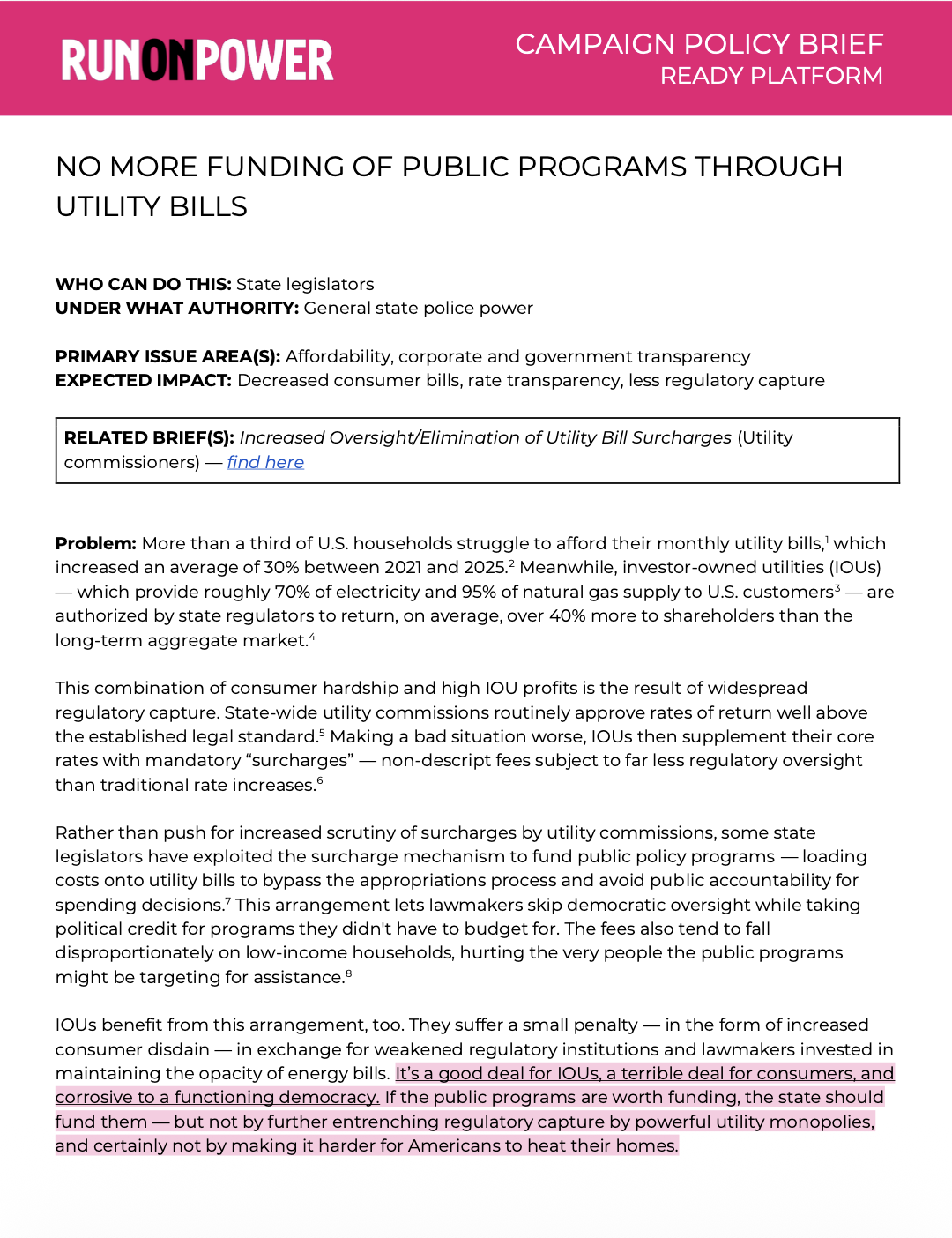
No More Funding of Public Programs Through Utility Bills
Rather than push for increased scrutiny of surcharges by utility commissions, some state legislators have exploited the surcharge mechanism to fund public policy programs — loading costs onto utility bills to bypass the appropriations process and avoid public accountability for spending decisions.
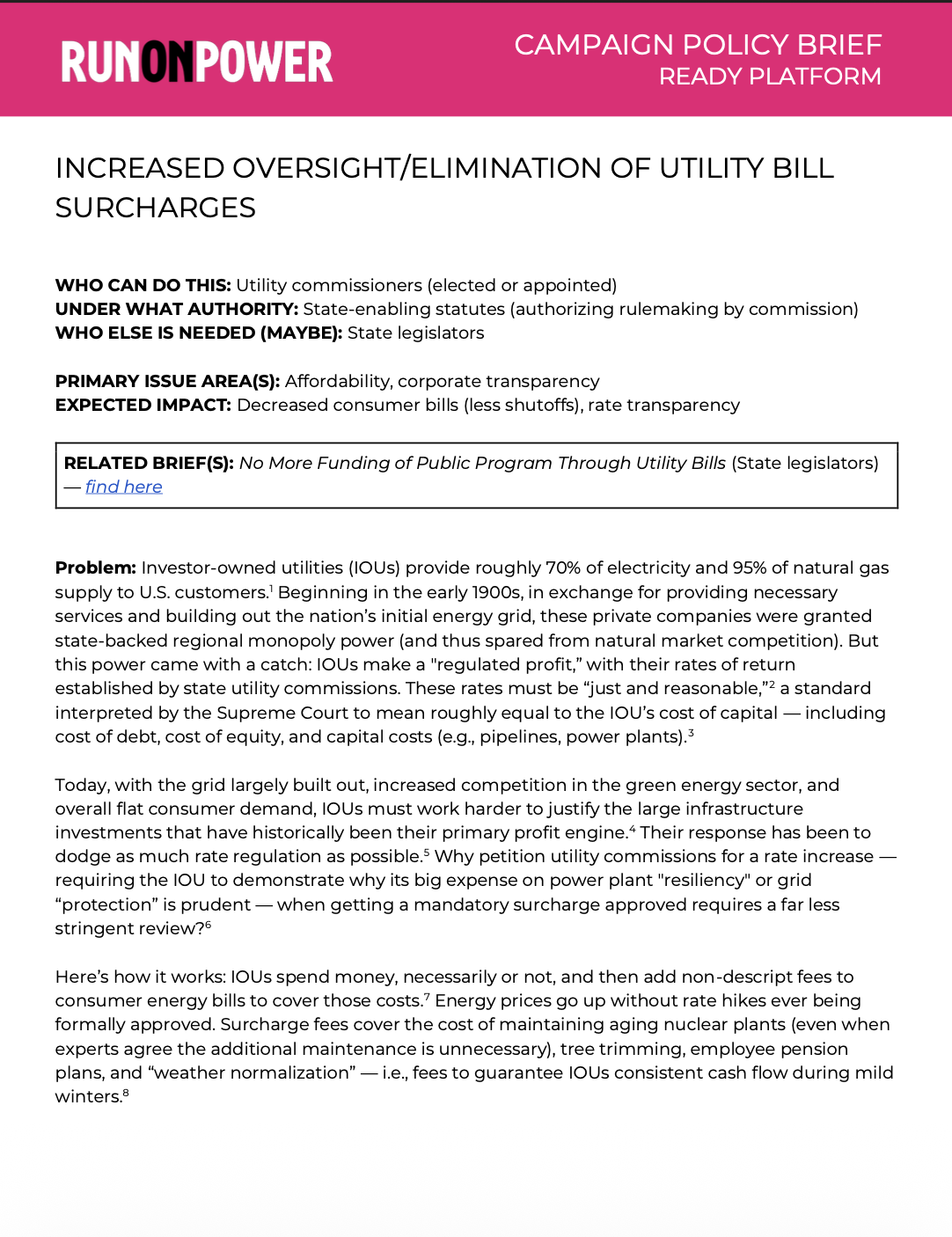
Increased Oversight/Elimination of Utility Bill Surcharges
Energy bills have become everything bagels… just not the good kind. Delivered to your mailbox every month, topped with loads of items you’ve never heard of, didn’t opt into, and can’t opt out of. These toppings, which tend to fall disproportionately on low-income households, are more than just annoying and expensive — they’re rate hikes without rate hike approval.
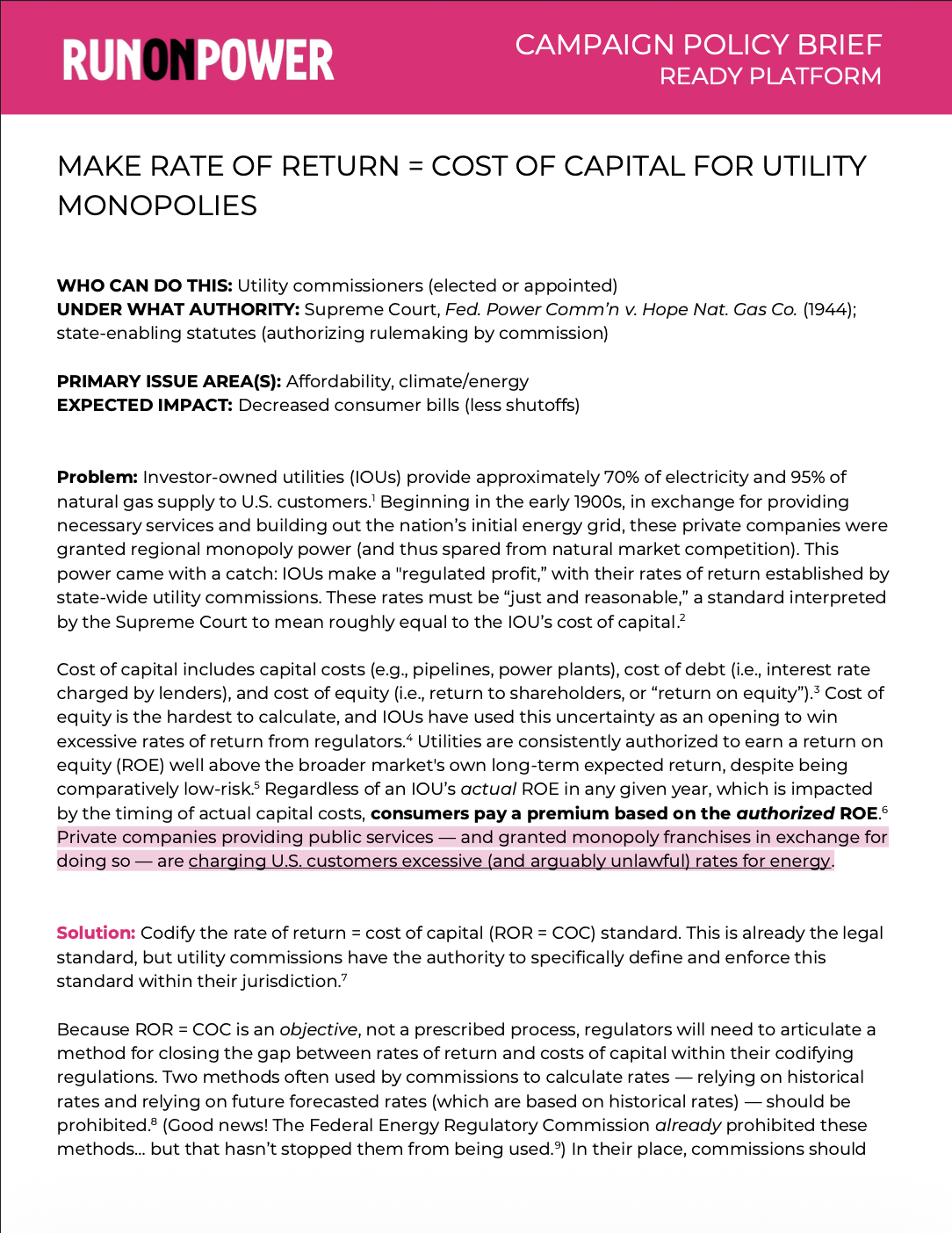
Make Rate of Return = Cost of Capital for Utility Monopolies
Regardless of an IOU’s actual return on equity in any given year, which is impacted by the timing of actual capital costs, consumers pay a premium based on the authorized ROE. Private companies providing public services — and granted monopoly franchises in exchange for doing so — are charging U.S. customers excessive rates for energy.