
SEARCH BY KEYWORD OR BROWSE BELOW »
“Abundance” Without Sacrificing Values: Community-Benefit Agreements and Streamlined Development
We do need more abundant housing, public transportation, and energy infrastructure, but forfeiting labor, environmental, and democratic values to get there can’t be the answer. How do we reconcile both goals?
Corporate Ownership: Create a Right of First Refusal for Workers
Wealth, of the kind the shareholder class holds, is built by leveraging existing assets to generate more wealth. A wage cannot do this. Only ownership — only power over capital — can. Workers must share in the wealth their labor creates. The most direct route to achieving this is for workers to partially or fully own the firms where they work.
A New Kind of Corporate Ownership Model to Correct Shareholder Primacy Limitations and Build Worker Wealth
Employees must share in the wealth their labor creates, but models designed to achieve this fall short — largely because they try to sidestep becoming prey to the exact monopolistic market forces that produce wealth inequality in the first place, and in so doing, also sidestep any real opportunity to build worker wealth.
Amend “Right to Farm” Laws to Protect Community and Local Power
U.S. agriculture is dominated by industrial “factory farms,” also known as Concentrated Animal Feeding Operations (CAFOs) or “integrators.” RTF laws, once functioning as protection for local and legacy farmers, now primarily protect large-scale corporate operations.
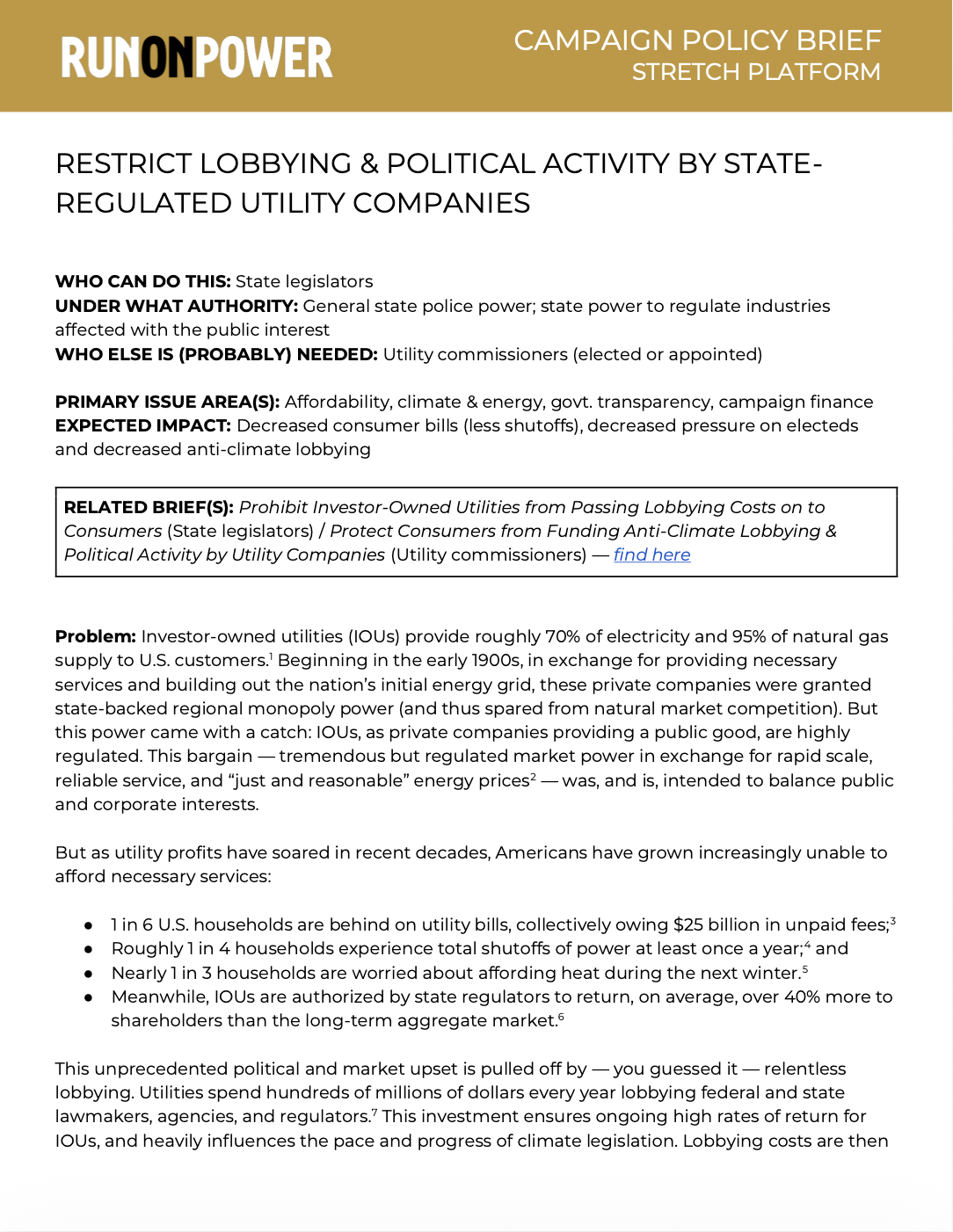
Restrict Lobbying and Political Activity by State-Regulated Utility Companies
Private companies providing public services — and granted monopoly franchises in exchange for doing so — have captured the regulatory and legislative processes intended to keep their interests aligned with those of the public. The result is growing energy poverty, continued climate abuse and misinformation, and widespread voter disenfranchisement.
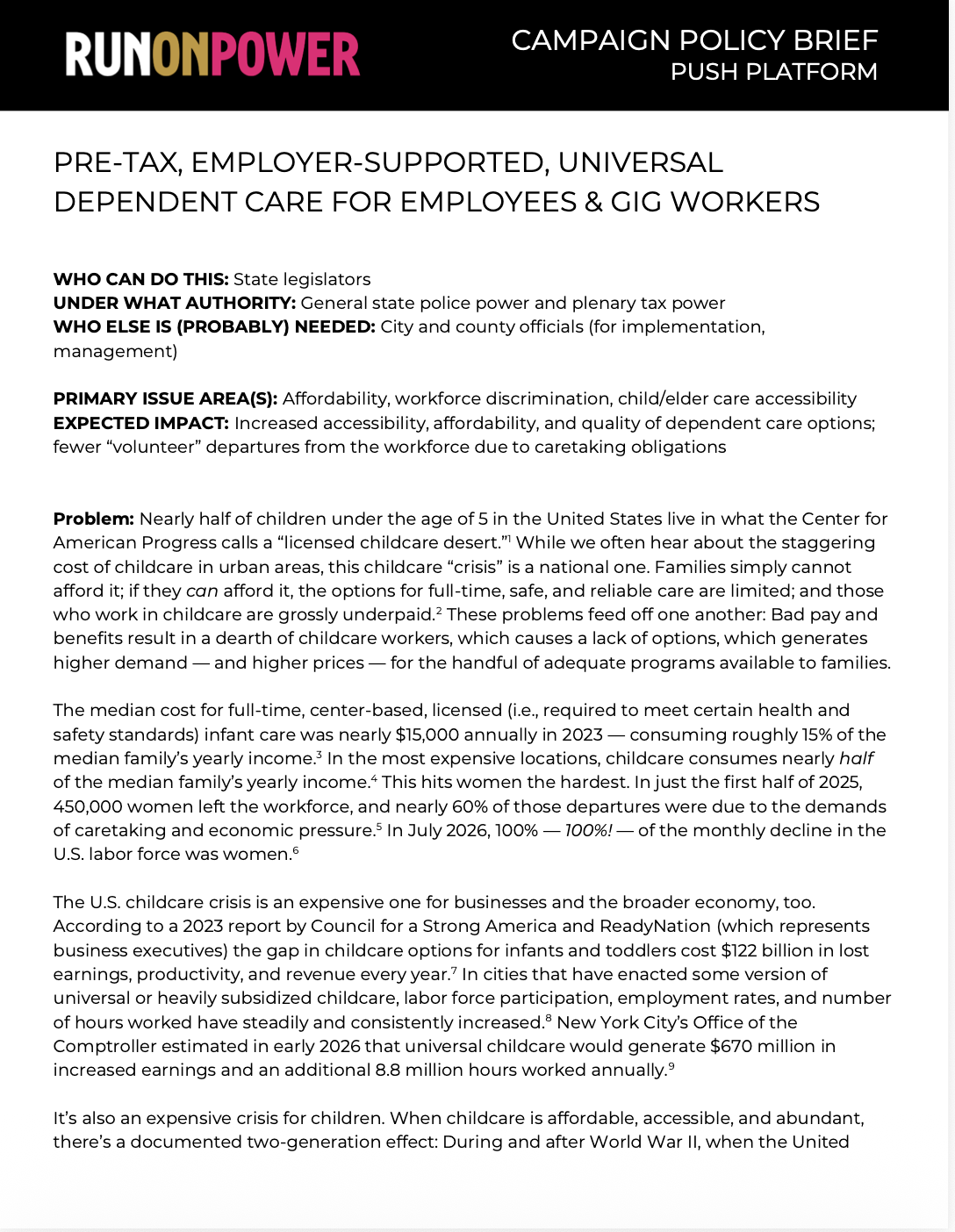
Pre-Tax, Employer-Supported, Universal Dependent Care for Employees and Gig Workers
Care is a public good, with deeply private impact — on families and businesses alike. The solution to the care crisis should likewise be one with both public and private dimensions. No one is unaffected, so no one should be unaccountable.
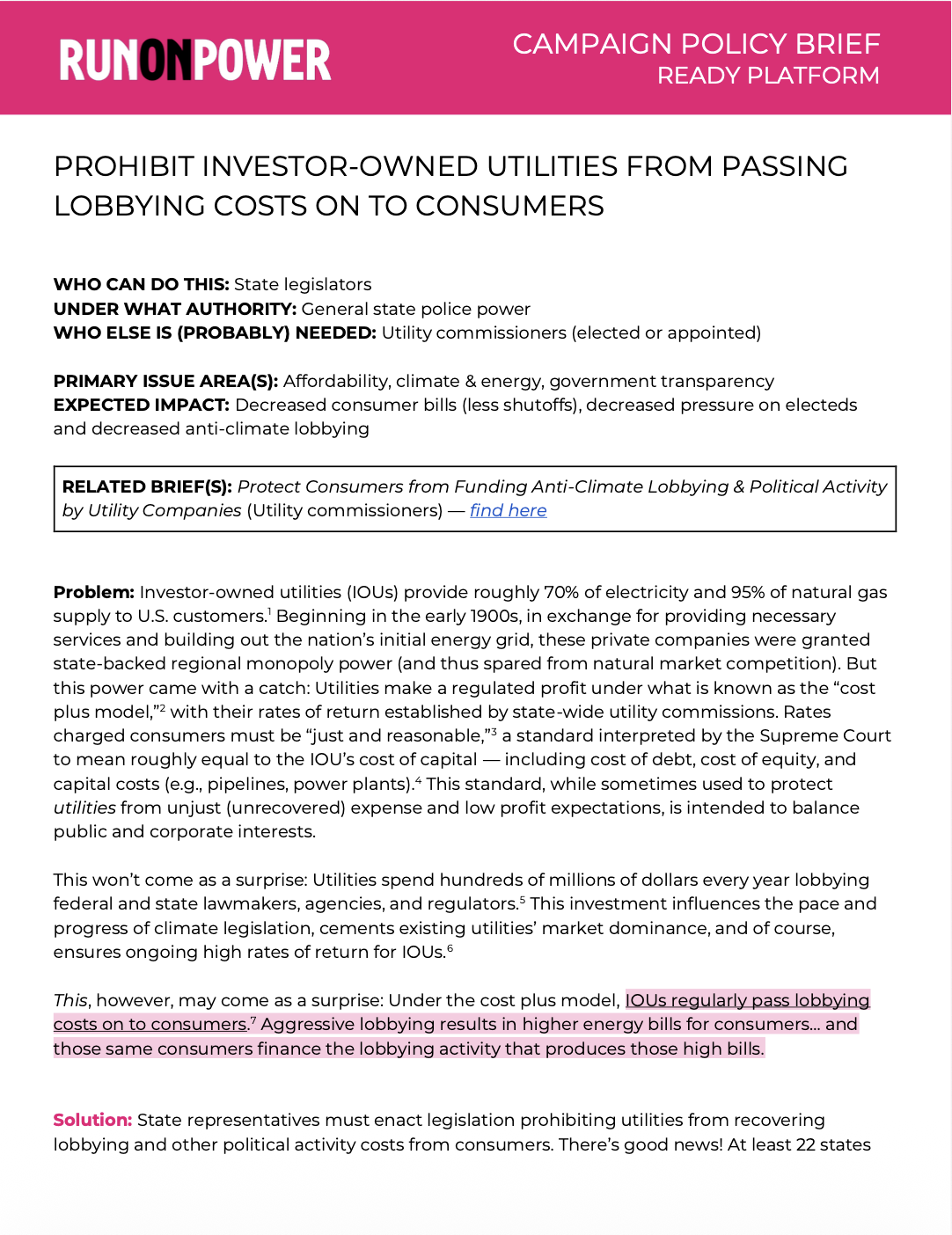
Prohibit Investor-Owned Utilities from Passing Lobbying Costs on to Consumers
Utilities spend hundreds of millions of dollars every year lobbying federal and state lawmakers, agencies, and regulators. This investment influences the pace and progress of climate legislation, cements existing utilities’ market dominance, and of course, ensures ongoing high rates of return for IOUs.